ANZ
ANZ Brazil
 America Latina
 France
 Germany
 Italy
Italy Portugal
 Nordics
 North America
 South Africa
 United Kingdom
Customers Prefer Paper Coupons
Customers Prefer Paper Coupons
Submitted by: Two Sides Nordics December 14, 2025
Written By Sam Upton
Discover why printed coupons are still the preferred way to receive retail discounts.
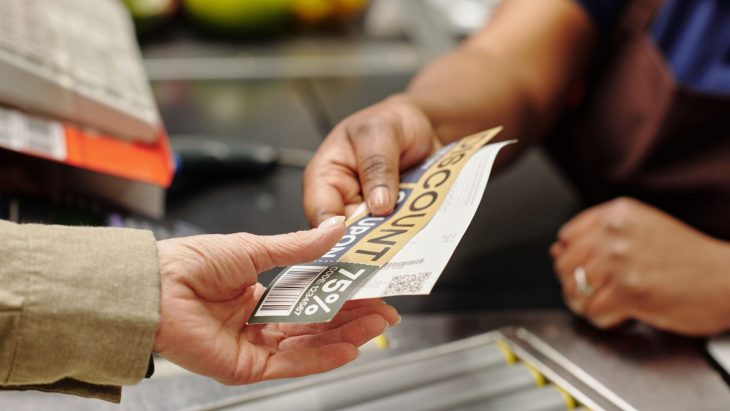
In a retail world increasingly driven by automation and digital media, there’s one place you can rely on to provide you with a handy piece of print: the supermarket checkout. Whether it’s the humble receipt or a small catalogue of offers, retail chains understand the power of physical media to compel shoppers to make a return visit and bag a bargain or two.
One of the most powerful weapons in the supermarket armoury is the paper coupon. While some retailers have tried to move their customers towards app-based coupons, requiring them to jump through a series of digital hoops to access the offer, many keep it simple by sending loyal customers a booklet of discount vouchers or printing them out at the till.
This has the key advantage of giving the customer a valuable reminder of the brand that’s kept in the home in full view, ready for the next shop. When tied to a loyalty programme, it also gives the brand a neat source of personal shopping data, which can be used for more targeted campaigns to increase basket size.
Number One For Impact
The power of the physical in-store coupon is outlined in a new study by retail intelligence firm Catalina UK, which shows that printed coupons at the till are now the number one way to receive offers for one in three UK shoppers – up from one in four in 2022. This puts coupons at the till ahead of app-based coupons, which have also grown in usage but remain preferred by just one in four shoppers.
“When you give shoppers something that feels relevant, useful and personal, it lands,” explains Huma Khan, Catalina UK Country Leader. “In today’s crowded, always-on landscape, a well-timed coupon can be a powerful moment of recognition. That’s when true loyalty begins – not by being reached, but by being understood.”
Going into the details of the study, Sainsbury’s shoppers show the highest engagement with print coupons, with Aldi and Iceland customers close behind. In fact, half of all UK shoppers say they don’t receive enough print offers, with three-quarters (74%) saying they are more likely to return to a supermarket offering tailored promotions.
Curiously, the younger generation, Gen Z, are most likely to feel overwhelmed by digital (35%) and least likely to want more of it (29%), demonstrating a saturation point for digital and the need for a more balanced media strategy.
All-Round Champions
These findings are backed up by a Japanese study published earlier this year that showed that paper coupons are more effective, more valued by shoppers and more cost-effective for marketers. The researchers conducted two experiments using simulated coupons: one for Starbucks and one for IKEA, with participants receiving identical paper and online coupons. The result was that not only were paper coupons preferred for their appearance, the clarity of messaging and the likelihood of use, but participants were far more likely to use them.
For one of the UK’s biggest supermarkets, the advantages of paper coupons are clear: customers like using them and, more importantly for the brand, they increase sales.
“For over 15 years, in-store coupons have shaped how we deliver personalised value to customers,” said Mark Given, Chief Marketing, Data and Technology Officer of Sainsbury’s. “It’s helped us drive incremental sales, enhance customer loyalty, and improve marketing performance. Our customers truly appreciate the value they receive from these coupons.”
To read the Japanese study, go to bit.ly/Online-vs-Online-Promotion


Share this story