ANZ
ANZ Brazil
 America Latina
 France
 Germany
 Italy
Italy Portugal
 Nordics
 North America
 South Africa
 United Kingdom
From Plastic To Pulp Packaging
From Plastic To Pulp Packaging
Submitted by: Two Sides Nordics April 27, 2026
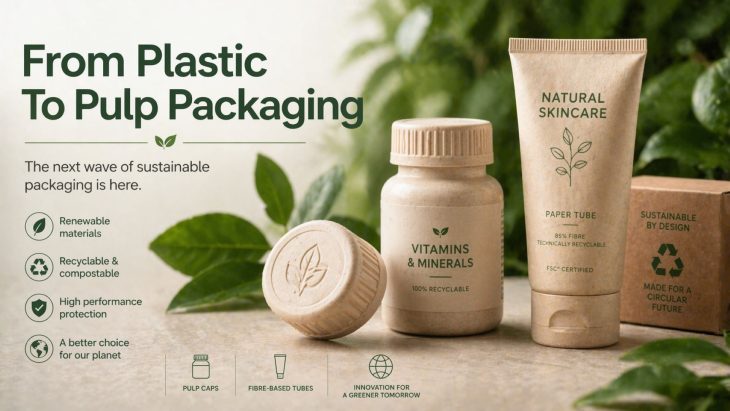
The gradual transition from plastic to pulp-based packaging is continuing with rigid plastic caps and tubes for pharmaceuticals and cosmetics next on the list.
Over the past decade, the shift from plastic to paper packaging has been nothing short of monumental. With many shoppers not even noticing, millions of products in every retail sector now come wrapped in pulp- or paper-based packaging, from crisps and sweets to clothes and even mattresses.
But there’s one plastic nut that’s been hard to crack – the thick, rigid plastic used for medicine, cosmetic and beauty packaging, such as bottle caps and tubes. Now, even that traditionally plastic material is close to being replaced.
Top Of The List
Screw caps for pharmaceuticals and supplements are one of the most widely used plastic components in everyday packaging. In Europe alone, the caps and closures market was valued at £15.5bn in 2023 and is set to rise to £26bn by 2032 (Fortune Business Insights). But those figures don’t take account of new innovations in pulp packaging, which have the potential to take a significant slice of the market.
One of those innovations is PulPac’s Dry Molded Fiber caps, which have been developed to match the function and consumer expectations of conventional plastics. Performing well across parameters such as thread engagement, opening and closing functionality, sealing architectures, and tactile experience, the caps offer design flexibility, allowing companies to print on the outside for increased branding power.
“When we show the cap to customers, the reaction says a lot,” said Charlotte Walldal, Chief Technology Officer at PulPac. “The first response is often disbelief that they’re made from fibre. The look, the sound when you tap it against a tabletop, and especially the tactile feel challenge expectations of what fibre can be.”
No Barrier To Innovation
Another form of plastic packaging that’s been standing firm against the paperisation trend is tubes for cosmetics and beauty products. The vast range of oils and chemicals used in make-up and skincare make their packaging highly challenging, with the barrier properties needing to achieve a long list of standards.
But a series of solutions are starting to emerge, such as Veritiv’s Helicot Paper Tube, which was a finalist in the 2025 Sustainability Awards. According to the makers, the tube is a “recyclable paper packaging solution made from over 80% paper and biodegradable PHA. Designed to be recyclable, compostable, and biodegradable in various environments, this innovative packaging provides a sustainable alternative to plastic, filling a crucial gap for circular packaging in the health and wellness market.”
Meanwhile, Neopac has just released details of its PaperX FibreTop tube, which has been certified as technically recyclable in the conventional paper stream, meeting the requirements of the CEPI/4evergreen Recyclability Protocol 2025. Claiming to be the world’s first fibre based tube featuring an 85% fibre content, it’s made from FSC-certified, food-grade materials
Dr Philippe Kern, Director of R&D and QM at Neopac, said: “This first-time certification confirms that with our PaperX technology, we can achieve the right balance between product protection, design and sustainability – even under the strictest requirements for recyclability.”
Upwards Trend
When it comes to the paperisation trend, it’s difficult to think of a form of plastic packaging that cannot be replaced. And if it can’t be replaced today, then you can be sure that a number of companies and researchers are working hard to find the solution.


Share this story