A new international report shows that different people need different messages regarding sustainability.
When it comes to consumer attitudes towards sustainability, the common conception among brands and companies is that people are either sustainable or they’re not. However, a new report has found that there are four types of sustainability mindset, splitting people into distinct groups that each require different messaging and communication to push their environmental buttons.
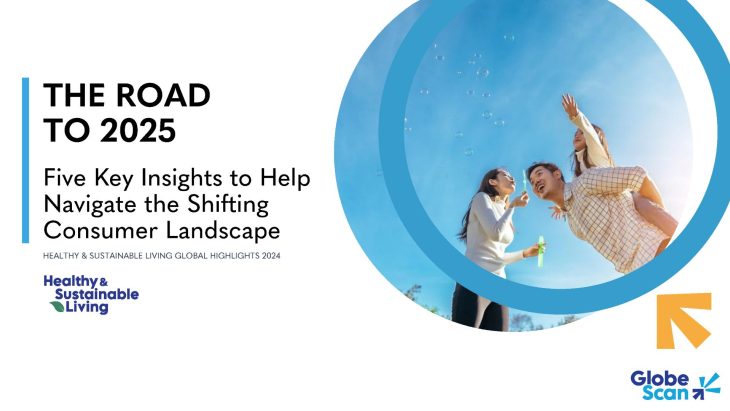
Backed by international companies such as Pepsico, IKEA, P&G and WWF, the global insights firm GlobeScan recently published its ‘Road to 2025’ report, which took in the thoughts and preferences of over 30,000 consumers across 31 markets.
As well as a number of insights that included the negative impacts of greenhushing – where companies pull back on their sustainability commitments – and how people with young families are driving the sustainable living agenda, the report identified its respondents as Anxious Inactives, Indifferents, Enthusiasts or Minimalists.
Anxious Inactives
With 28% of respondents fitting into this category, this is the largest group of sustainability consumer. These people are environmentally conscious and feel a significant amount of guilt and anxiety about their impact on the planet, believe individual actions have limited impact. This group has the highest percentage of Gen Z respondents.
The best way to engage Anxious Inactives is by providing clear and easy information on the steps they can take to make progress feel achievable, helping them break free from the anxiety-inaction cycle.
Indifferents
Indifferents make up 27% of the respondents in GlobeScan’s survey and are the least environmentally-conscious segment. With engagement lower than all other segments, this group is almost entirely disconnected from sustainability issues and concerns.
To reach Indifferents, provide general communication to show the personal benefits of environmental awareness, such as saving money, without overemphasising the sustainability aspect.
Enthusiasts
This group is the most environmentally conscious and empowered segment, and are highly engaged in sustainable behaviours and purchasing. With a 23% share, Enthusiasts tend to be slightly overrepresented in emerging markets, especially Africa.
Enthusiasts are more likely to be excited about new sustainable products and services, and can be reached by brands offering enhanced and exclusive experiences.
Minimalists
According to the report, Minimalists represent 22% of the world, and try to lower their climate footprint by reducing consumption and saving money. They are driven by practicality and small, impactful changes. Slightly overrepresented in Europe and North America, Minimalists tend to express their environmentalism in a manner associated with the degrowth movement.
To engage with Minimalists, brands should focus on cost-effective products, services and behaviours that enable them to reduce their environmental impact without compromising their financial goals.
Overall, Globescan’s report highlights the need to move beyond the traditional one-size-fits-all sustainability messaging. By recognising these distinct consumer groups, the report says that brands need to tailor their approach to match these distinctive mindsets.
But while the report is aimed at brands, the report also has key insights for print and paper companies, which would benefit from understanding the different types of consumer and their sustainability journeys. Which group do your customers fall into?
To download Globescan’s ‘The Road to 2025’ report, go to bit.ly/Globescan-Road-to-2025

 ANZ
ANZ Brazil
 America Latina
 France
 Germany
 Italy
Italy Portugal
 Nordics
 North America
 South Africa
 United Kingdom